Blown-in (loose-fill) insulation is the usual choice for an open attic floor. It fills around wiring, pipes, truss webs and odd-shaped bays, and it's the easiest way to top up insulation that's already there. Fiberglass batts suit open, evenly spaced joist bays and smaller sections, and they're often the better fit where loose fill would get disturbed. The two can be combined: ENERGY STAR notes you can add loose fill over batts and vice versa, and batts laid over loose fill should be unfaced.
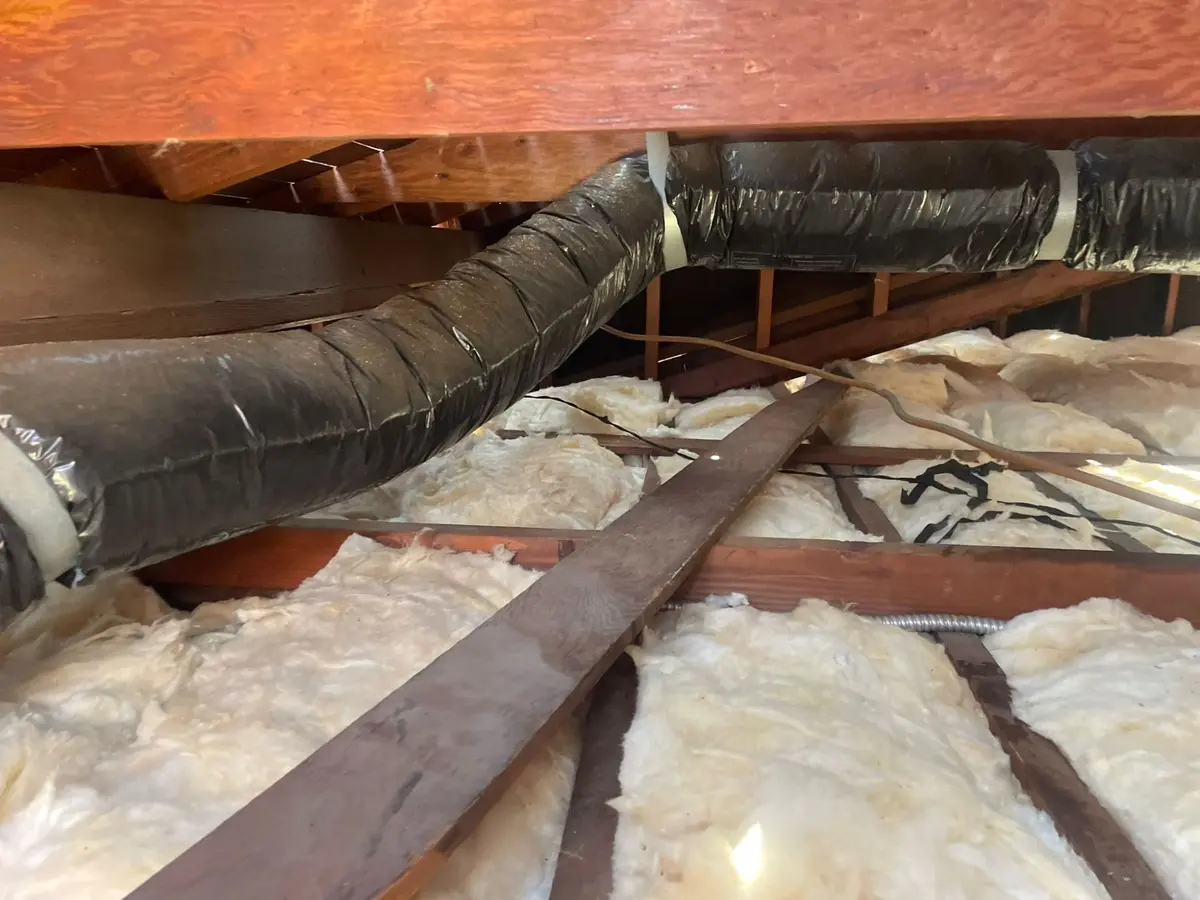
Removal is the exception, not the default. ENERGY STAR's guidance is that unless the old insulation is wet, moldy, smelly or contains animal waste, new insulation can go right on top of it. So we don't sell removal you don't need. It makes sense when a roof leak has soaked the insulation, when rodents have nested and left droppings and urine in it, when there's mold or smoke damage, or when the old material has to come out so the attic floor can be properly air sealed. A leak has to be fixed before anything new goes in, or the new insulation gets ruined too. More on that in should you remove old attic insulation?
Rodent cleanouts need care. The CDC tells homeowners not to sweep or vacuum rodent droppings and nesting material, because it can put particles in the air. Our crew wears protective gear, removes and bags the contaminated insulation, and disinfects the affected areas before new insulation goes in. If rodents are still getting in, have the entry points sealed first — otherwise they'll nest in the new insulation.
One thing we never touch: vermiculite. It's a pebble-like loose fill, gray-brown or silver-gold, found in some older homes. The EPA says to assume it contains asbestos and not to disturb it. If we find it, we stop and refer you to a licensed asbestos professional.
When the job is done you get it in writing. Under the FTC's R-value Rule, an installer's receipt for loose-fill insulation shows the coverage area, the installed thickness, the minimum settled thickness, the R-value and the number of bags used. We add before-and-after photos, the same as on every duct cleaning job.